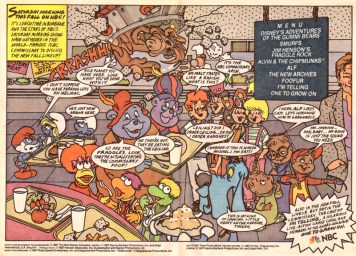
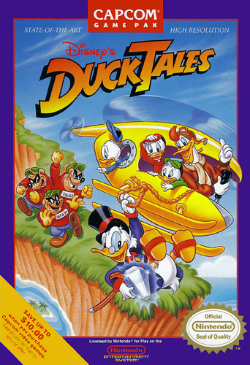
We’ve watched Ducktales, Batman ‘66, we’ve read Mr. Men and Little Miss books before bed. We own The Great Mouse Detective and Mickey’s Christmas Carol. We laugh to Inspector Gadget. A pair of Ninja Turtle figures showed up at Christmas.
Wait a second. Is this my son’s childhood or my own?
Sometimes I feel guilty that it might be hard to tell, as like many parents, it becomes all-too easy to want to show your kids “the good stuff,” the stuff we grew up with, the stuff we loved, and hope that we can find or create a mutual interest to bond over, while at the same time, feeling the excitement and joy of when we first experienced it as kids. That reliving of our own youth alongside them is essentially nostalgia. Second-hand nostalgia that we pass down to our kids.
I didn’t just make that up. Honest. The concept of second-hand nostalgia is a real thing. Nostalgia scholar and author Dr. Ryan Lizardi writes about it in Nostalgic Generations and Media: Perception of Time and Available Meaning, noting “As older generations of people are encouraged to revisit media and products they loved as children by hyper-nostalgic media companies, through remakes, reimaginings, and re-releases, it leads to a reduction in available meanings for current and subsequent generations who are then all encouraged to attach to the same nostalgia-soaked objects.”
I’ve talked about it a lot, even if at the time I didn’t realize exactly what I was doing. But I’m guilty of it. Totally.
There’s an emotional connection to our past. Sometimes good. Sometimes not so good. And for many of us, those emotions, connected to different parts of our lives, are represented by the media we consumed at the time.  When I was a teenager, Friends was the new, big thing on television. When I was in my mid-to-late twenties, How I Met Your Mother was just beginning to tell its tale of friends finding their place in the world through the lookback of a nostalgic narrator talking to us from the future. And as a kid? I had a pretty happy and carefree childhood, and so when I look back on the cartoons of the Disney Afternoon, or the sitcoms of TGIF, I look back with a smile, as it brings about the same happy and carefree feelings that went along with the times I was first watching.
Referring to KI Batcho’s 1998 research on Personal Nostalgia, Sergio Davalos, Altaf Merchant, Gregory M. Rose, Brenton Lessley, and Ankur M. Teredesai note upon the emotional connection to our media in their article The Good Old Days’: An examination of nostalgia in Facebook posts, saying “Batcho (1998) posits that nostalgia prone people have a high capacity for emotion, which increases the likelihood of experiencing both ‘sweet’ and ‘bitter’ emotions. Individuals in the high nostalgia group, moreover, were found to perceive the past as more favorable than those in the low nostalgia group (Batcho 1998).”
 But it’s had me thinking a lot about what that means as my kids, or other kids whose parents may be handing-down their own nostalgia, grow up. If my childhood pop culture was dominated by Scrooge McDuck, Batman, Ghostbusters, what will theirs be made up of?
Whereas I look back nostalgically on these things, will they be growing up looking back nostalgically on pop culture that was handed down to them to begin with rather than their own, new experiences and media to attach to?
There is, at least so far, been a cycle to nostalgia, typically 40 years with a 20 year microcycle within it. By that, I mean that the producers of the media we consume are often around that age and the products they make find many of their roots in the time from which they were born or growing up.
In a 2012 The New Yorker article called The Forty-Year Itch, Adam Gopnik notes “Though pop culture is most often performed by the young, the directors and programmers and gatekeepers – the suits who control and create its conditions, who make the calls and choose the players – are, and always have been, largely forty-somethings, and the four-decade interval brings us to a period just before the forty-something was born. Forty years past is the potently fascinating time just as we arrived, when our parents were youthful and in love, the Edenic period preceding the fallen state recorded in our actual memories.”

Sometimes, we get a 20 year microcycle when those same producers of media are creating products that remind them of their teen years/young adulthood. But it keeps the cycle going. It’s why we saw things like Happy Days, Laverne and Shirley, American Graffiti, and so much of the 1950s in the 70s (20 year cycle), The Roaring 20’s and Winchester Cathedral in the 60s (40 year cycle), even nostalgia for the turn of the century in films like The Magnificent Ambersons and Take Me Out to the Ballgame by producers of the 1940s.
So, if we’re to look at the 20th century in terms of decade-chunks, each certainly had its moments of originality. It’s why we think of bell bottom jeans, disco, hippies, grunge when we associate with the 70s, 60s, and 90s respectively. But at the same time, living in that decade and producing within that decade were people nostalgic for something that had come before.
Still in the dawn of the 21st century, though, it almost feels like we’re constantly in a state of looking backward. And with the technology that we have at our fingertips it’s never been easier to constantly be re-living the past for whatever we become nostalgic for at any given time. If I want to watch You Can’t Take it With You or Cary Grant in Holiday, I’ll just pop in a DVD. If I want to try and recapture the feeling of laying on the floor of my childhood home, perhaps I get online and find an episode of Count Duckula or Danger Mouse.
Not that remakes are anything new. Heck, The Awful Truth, a 1937 film starring Cary Grant and Irene Dunn was a remake of a 1922 silent film of the same name that was in itself a remake of a theatrical production. But there’s no doubt that we’re living in an era that’s often stuck on the past.
So if many of us (including the producers of media remakes and reboots) are so often looking backward, where does that leave the future? I have to wonder if it’s inevitable that we’re going to hit a point where the decades we look back on were a regurgitation of lookbacks/nostalgia for decades prior to that, versus being their own particular thing.
More importantly, technology has taken away (or at least made it start to fade) the cultural nostalgia we’ve had for the most part up to this point. It’s rare and will get rarer, I think, to have the moments of people clamoring around the series finale of M*A*S*H or spending all summer talking about Who Shot J.R Ewing.
Because when these cultural events happened, choices were much more limited. You went to the movies to see a film. You watched what was on the small number of channels on television. There was no home video market. That didn’t come along until the 1980s (I remember what a thrill it was when my parents, for a birthday party, rented a VCR and Mary Poppins for all us kids in attendance to watch). So many more people shared those media moments together, as a culture.
Today, though, we can hop on Amazon and order a DVD to be here in a matter of days. We can click on Netflix or Hulu, or Amazon Video and with a subscription watch films or TV shows from a back catalog that spans generations. Still not finding your cup of tea? Hop over to YouTube and check out a web series like the new ThirtyNothing and find a new personal favorite.
Our options are almost limitless. We’re no longer bound by just what the major media companies produce as in the past. So what we will become nostalgic for will vary so greatly from the larger, en masse nostalgia of yesteryear.
“Nostalgia used to depend on the denial of access to the subject, on its unreachable presence. Now there is an effective formula to encourage nostalgia,” writes Gil Bartholeyns in The Instant Past: Nostalgia and Digital Retro Photography.
I can’t help but think that technology has made the experiences so individualized now that nostalgia is going to start becoming increasingly less cultural and more individual going forward.
Brian Raferty asked a similar question recently in Wired talking about ‘00s Nostalgia Wave – It Might Be the last Revival, saying “Years from now, when we finally gaze back at the pop highlights of this modern age, will any of us even be looking in the same direction?…My guess is that future waves of nostalgia will focus less on specific pop-cultural explosions and more on the technologies that allowed them to spread. That’s partly because it’s never been easier to tune out the mass culture, making shared moments all the more rare.”
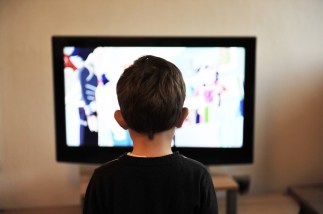
So where does that leave our kids and their childhood of second-generation nostalgia? I don’t know. Even if I were to curb their exposure through my own preferred cartoons, toys, etc, it’s still out there – in remade or rebooted, or sometimes just plain rerun form. What will they look back on when they wax nostalgic about the cartoons and films of their day?
It might be about the technology they watched it on, like how I remember the VHS/Mary Poppins rental above. They could be looking back at what might be considered quaint technology of streaming services where we watched Disney movies from before I was even born.
Or perhaps, for them, they’ll look back on the items they were fond of or associate with their childhood and not care where or when they came from, simply that they existed, and were there for them to enjoy.
I can pontificate forever. But I think, truly, only time will tell.
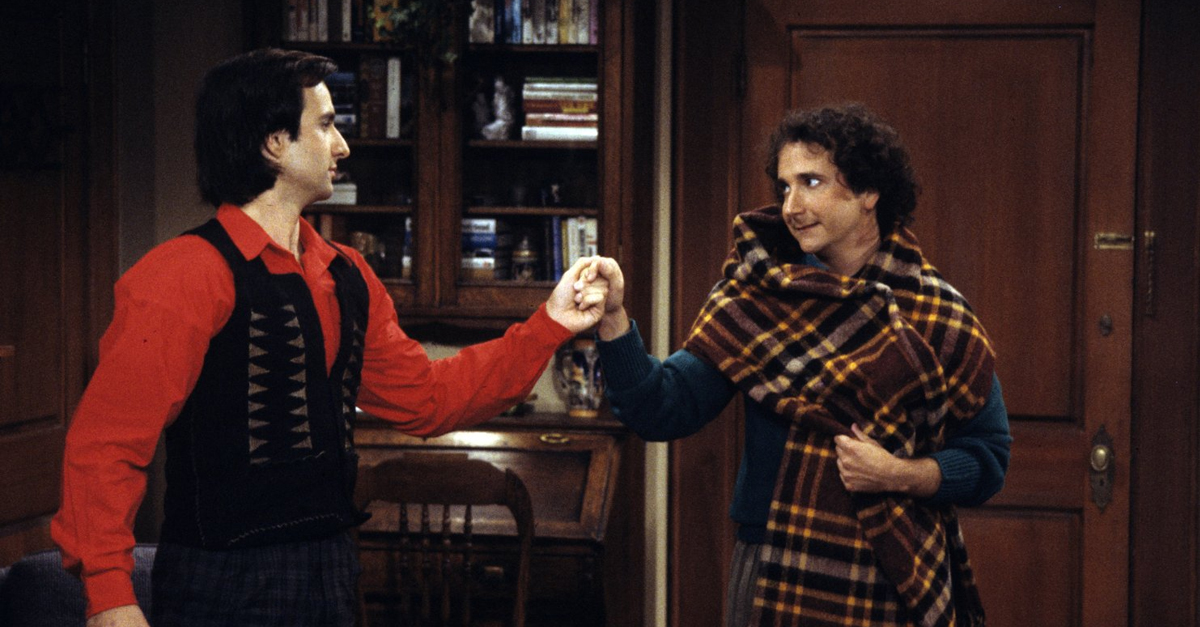
 If you know me, or heck, if you’ve read past entries on this blog, you know how nostalgic I can get – longing for previous times, or pieces of culture from various parts of my life, or even before my time. I admittedly get that way about a lot of things – cartoons, films, video games, comic books, and TV shows.

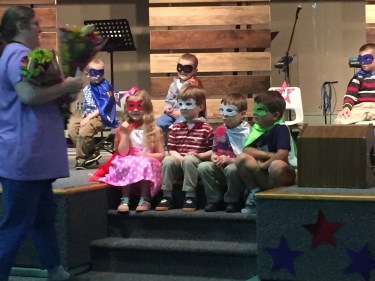 Like a breeze it arrived, swift and sweeping (in emotion).
 Added to that, his young world and expectations were thrown for a loop when we told him the weekend following his moving-up ceremony that he would be attending a different school than the one we were planning, the one he had attended multiple orientation nights for, where several of his friends from Pre-k were headed.
 So change is not always the adaptable, easygoing “get over it” that so many folks think is a default for all kids. It will take time. Time, time, time. You are a tricky thing. Filled with good, filled with bad, but most of all, filled with change that keeps our worlds from ever getting boring, and teaching us to learn as we go and figure out how to change with you (even if it takes some of us a little longer to accept) at the risk of being left behind.
 I’m not really a video game guy.

 In the course of any given day, I check my smart phone device constantly, scrolling through Twitter and thinking if I have anything funny to say, checking email to see if anyone’s gotten back to me about the house we’re selling or one of the myriad of book queries I’ve put out there, checking in with the virtual beings whose lives I lord over in Sims Freeplay, or checking my Google Keep app for the numerous to-do lists it allows me to make, organize, add to, and check off as I complete things in the never-ending, always growing list of tasks for work, home, creative pursuits, etc. It’s constantly ongoing, and I keep it that way. I constantly think of things that need to get done and add it to the list. Or I check to see what i can cross off. Some are more pressing than others. Others aren’t necessary at all. But I check obsessively regardless. It’s as fruitless as trying to keep up with email.
 Then I think of the calm, the peace, the feeling of being in the now, in the present that I felt looking at the baby’s form on that monitor. It may sound silly, but it was almost akin to the feeling of being present I experience when I’m sitting alone looking at nature, whether it’s a walk through a nature trail and admiring the plants and trees, or sitting quietly in our backyard, sans digital devices, getting lost in the greenery, trees, squirrels, rabbits, birds, and wildlife going about their day.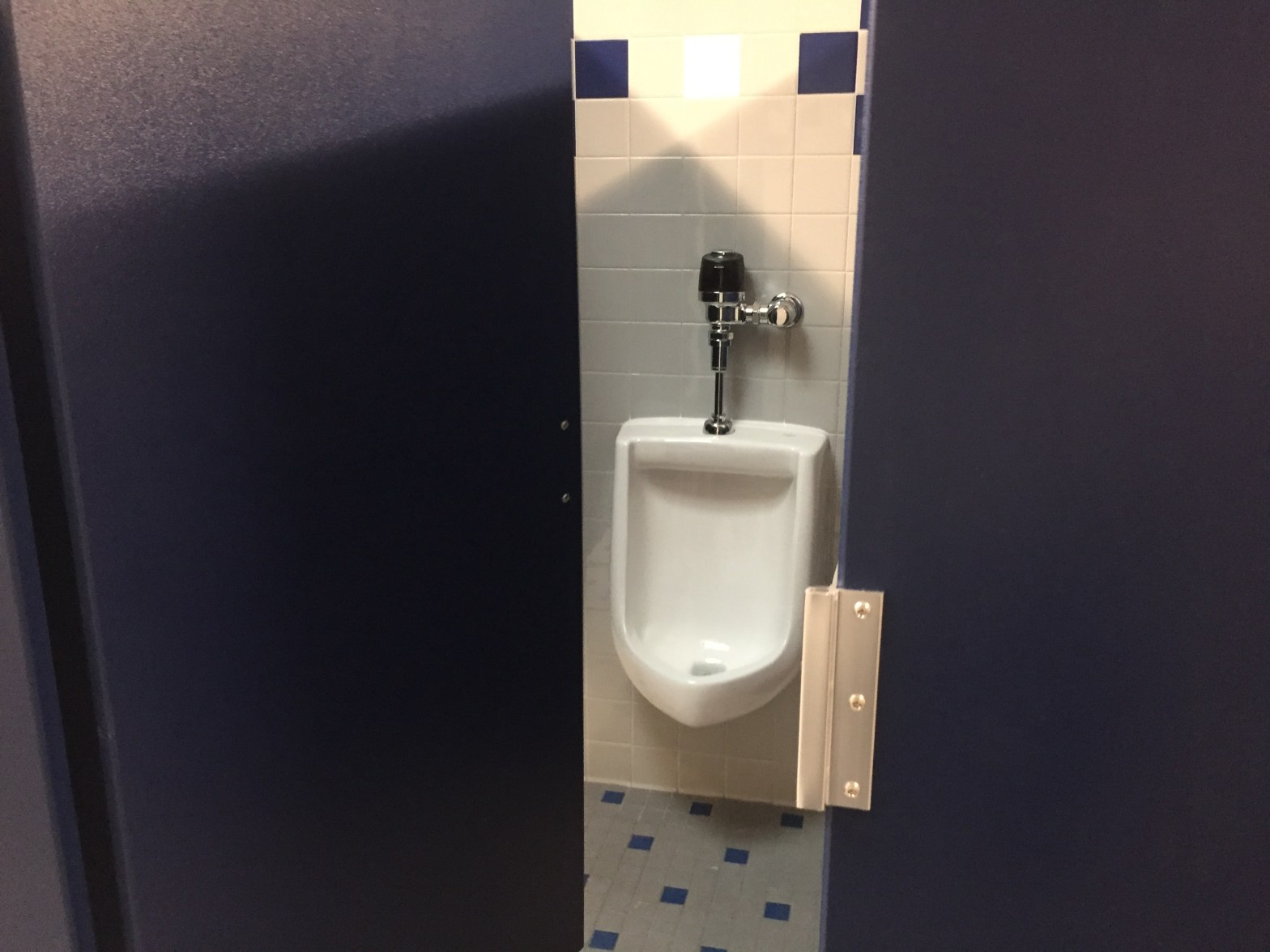
 “…but the Riddler’s clue, Robin. When is a door not a door?”
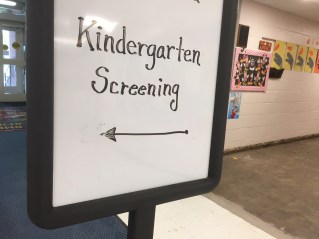
 We’ve been making a lot of trips recently to what will soon be our son’s new elementary school for a series of Kindergarten nights designed to get the kids used to the environment, to the lessons (lots of tactile activities, games tied into words, letters, etc), and getting to know their soon to be teachers and classmates.
 There, in the bathroom, were of course the sinks, the standard toilets, etc. But then, as if rays of sunlight poured out of it, was a stall with a urinal. Yes. A urinal within a stall, with a door that closed. And if you’ve ever been in a public bathroom with your son, standing at a urinal with his pants around his ankles and his bum sticking out for the world to see, you’ll understand why I thought this was such a cool concept.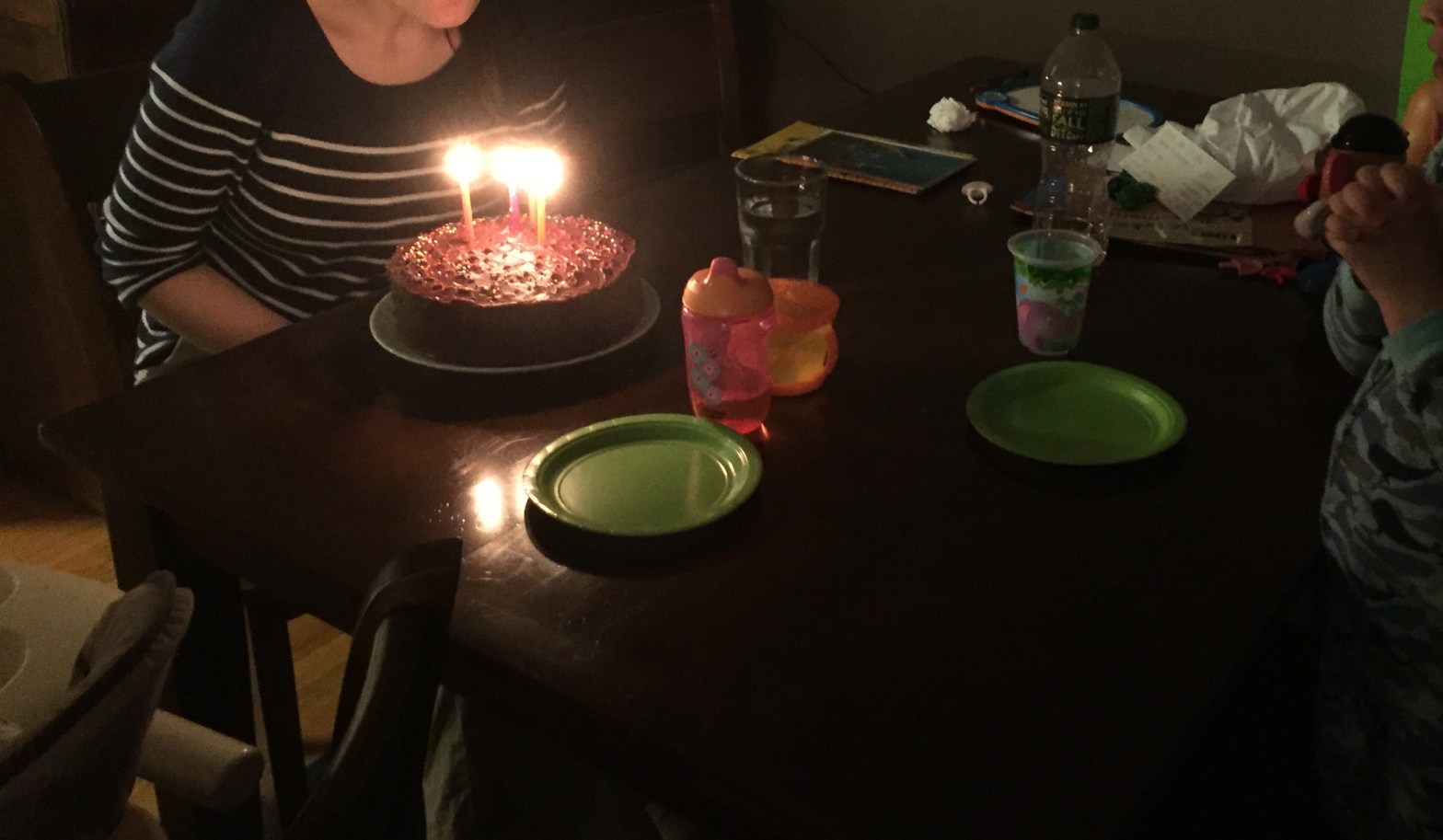
 It’s been a big week in our household.
 The kids were excited to unveil their gifts, which they picked out themselves – a scarf, an adult coloring book (“To calm you,” the little guy told her) and a book on Thomas Jefferson (“Because I know you like history, and books, and Thomas Jefferson’s your favorite president,” he explained) and a copy of Mike Nesmith’s new autobiography and the accompanying CD from me.

 It’s no big secret that I’m

 It was just one of those nights. No matter what hour the clock ticked away to, it all played out like a CD that wouldn’t stop skipping – the crying from our daughter’s room going on and on as the night stretched to early morning.
 Anywhere and everywhere along the open road was the map of our journey, through the streets of downtown, to the country routes of neighboring villages and towns.
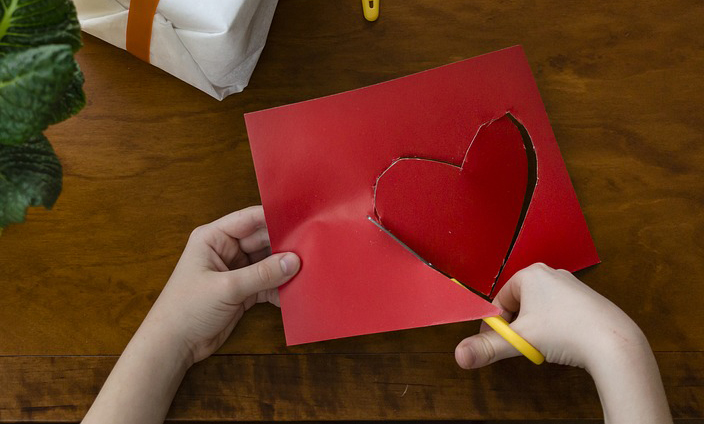
 This past Valentine’s Day, our son and daughter each got cards in the mail from their grandparents. Inside our son’s card was a ten dollar bill. He immediately became very excited, with a wide smile and look of excitement on his face. I imagined that images of a new action figure or some type of toy was dancing through his head.
 But here, faced with the reality of cash in his hand, he wanted to give it away, to help someone less fortunate than he and it meant the absolute world to see.
 According to Tomasello, human beings have a sense of “we,” a shared purpose, a bond that he says explains even simple social norms such as what makes it rude to walk away from an activity with another person without any type of advance warning.
